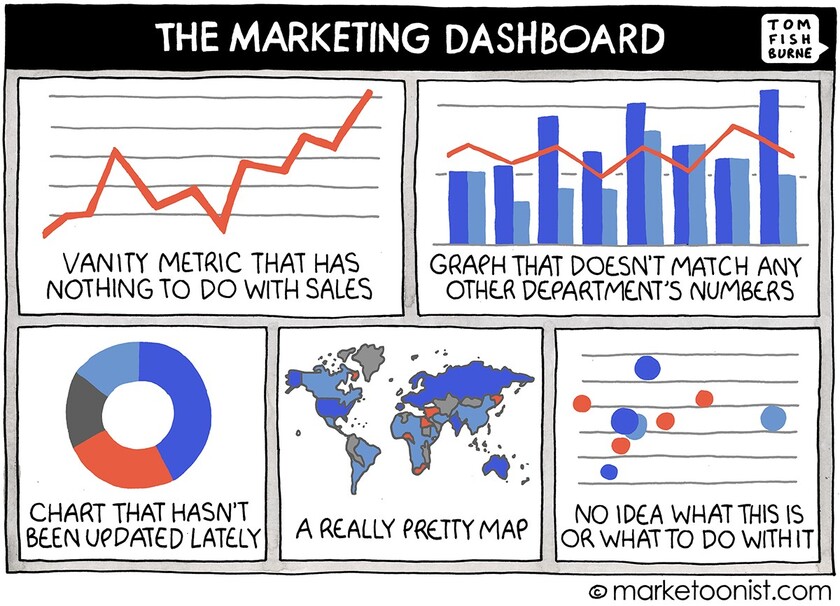

In today’s fast-paced business environment, marketing teams face immense pressure to deliver measurable results that directly contribute to company growth. Yet many struggle with disconnected campaigns, unclear priorities, and difficulty proving ROI to leadership. KPI Karta solves this by providing a visual framework that connects marketing activities to strategic business objectives, making performance tracking intuitive and actionable.
Unlike traditional dashboards that simply display numbers, KPI Karta helps marketing teams map their daily work—campaign launches, content creation, lead generation—directly to broader company goals like revenue growth, customer acquisition, or market share expansion. This alignment creates clarity, accountability, and continuous improvement.
The Marketing Alignment Challenge
Marketing leaders often juggle multiple priorities: generating leads, building brand awareness, nurturing customer relationships, and optimizing ad spend. Without a clear line of sight between these activities and business outcomes, teams waste time on low-impact work and struggle to justify budgets.
Consider a typical scenario: The company sets a goal to increase annual recurring revenue (ARR) by 30%. Marketing knows they need more qualified leads, but which channels? Which campaigns? How much nurturing is required? Without structure, efforts become scattered, and progress stalls.
KPI Karta addresses this by breaking strategic goals into actionable layers: objectives, critical success factors, key activities, and measurable KPIs. Marketing teams can visualize exactly how their content calendar supports lead quality, how lead quality drives pipeline velocity, and how pipeline velocity contributes to ARR growth.
Mapping Marketing Goals in KPI Karta
Getting started is simple. Marketing leaders begin by entering their top business objective—say, “Grow qualified leads by 50% in Q2.” KPI Karta then prompts them to identify the critical success factors, such as:
- Introduce a new product line or extension of an existing one
- Develop new partnerships
Each success factor links to specific target markets, and what approaches will be taken. We can then identify marketing activities: SEO content production, LinkedIn ad campaigns, email nurture sequences, and webinar series. Finally, KPIs measure progress: monthly organic traffic, cost per lead, lead-to-opportunity conversion rate, and marketing qualified lead (MQL) volume.
The visual interface shines here. Teams see a cascade diagram where every campaign connects upward to business impact. Need to pause underperforming LinkedIn ads? The effect on lead volume and ARR contribution is immediately clear. This transparency eliminates guesswork and fosters data-driven decisions.
Real-World Marketing Use Cases
Case Study: SaaS Marketing Team Scales Efficiently
A B2B SaaS company used KPI Karta to align their 12-person marketing team around a single goal: increase MRR by $50K. They mapped activities across channels:
- SEO/Content: Track keyword rankings, organic traffic, and content download rates
- Paid Ads: Monitor cost per acquisition, ad-to-lead conversion, and lifetime value
- Email Nurturing: Measure open rates, click-through rates, and MQL creation
Within 90 days, the team identified that paid social delivered 3x higher-quality leads than display ads. They reallocated budget, resulting in 42% more MQLs and $62K in new MRR—exceeding their target.
Agencies Love KPI Karta for Client Reporting
Marketing agencies particularly benefit. Client goals often sound vague: “grow your brand.” KPI Karta translates this into concrete deliverables: 15% engagement rate increase, 200 new leads per month, 10% website conversion lift. Agencies share live KPI Karta views with clients, showing real-time progress and justifying retainers.
Key Marketing KPIs You Can Track
- Lead Generation: MQLs created, cost per lead, lead source attribution
- Pipeline Impact: Lead-to-opportunity conversion, marketing-influenced revenue
- Campaign Performance: ROI by channel, customer acquisition cost (CAC)
- Content Effectiveness: Engagement rates, time on page, form completion rates
- Team Efficiency: Tasks completed, campaign velocity, content production rate
Each KPI links back to activities, so teams instantly see which efforts move the needle. Automated progress tracking eliminates spreadsheet chaos, while visual alerts flag when targets slip.
Driving Performance Through Alignment
The real power emerges when teams iterate. Monthly reviews become strategic discussions: “Our email nurture sequence converts at 8%, but organic leads drop off at 2%. Should we invest in SEO guides or landing page optimization?” With everything mapped, decisions become obvious.
Marketing directors report 30-50% faster alignment meetings. Campaign managers spend less time explaining results and more time optimizing. Executives gain confidence in marketing’s strategic contribution.
KPI Karta also excels at cross-functional alignment. Sales see exactly which marketing campaigns feed their pipeline. Finance understands CAC trends. Leadership tracks how marketing drives overall growth. This shared visibility eliminates silos and accelerates execution.
Getting Started with KPI Karta
Implementation takes minutes. Sign up for the 14-day free trial, import your current goals, and invite your team. No complex setup—KPI Karta handles the structure. Agencies can create client-specific workspaces, while enterprises scale across departments.
Pricing starts at $29/month for Starter teams, scaling to Enterprise plans with unlimited users and advanced reporting. Lifetime deals remain available through select partners.
The Results Speak for Themselves
- 40% faster goal alignment
- 25% improvement in campaign ROI
- 60% reduction in reporting time
- Higher team morale from clear priorities
In a world where marketing must prove its worth, KPI Karta delivers the clarity and structure needed to thrive. Stop guessing which activities matter. Start connecting every campaign to business success.
Ready to align your marketing team? Try KPI Karta free today.